Is AI the Next Big Thing in Nollywood, or a Threat to Its Soul?
ai-in-nollywood-opportunity-or-threat
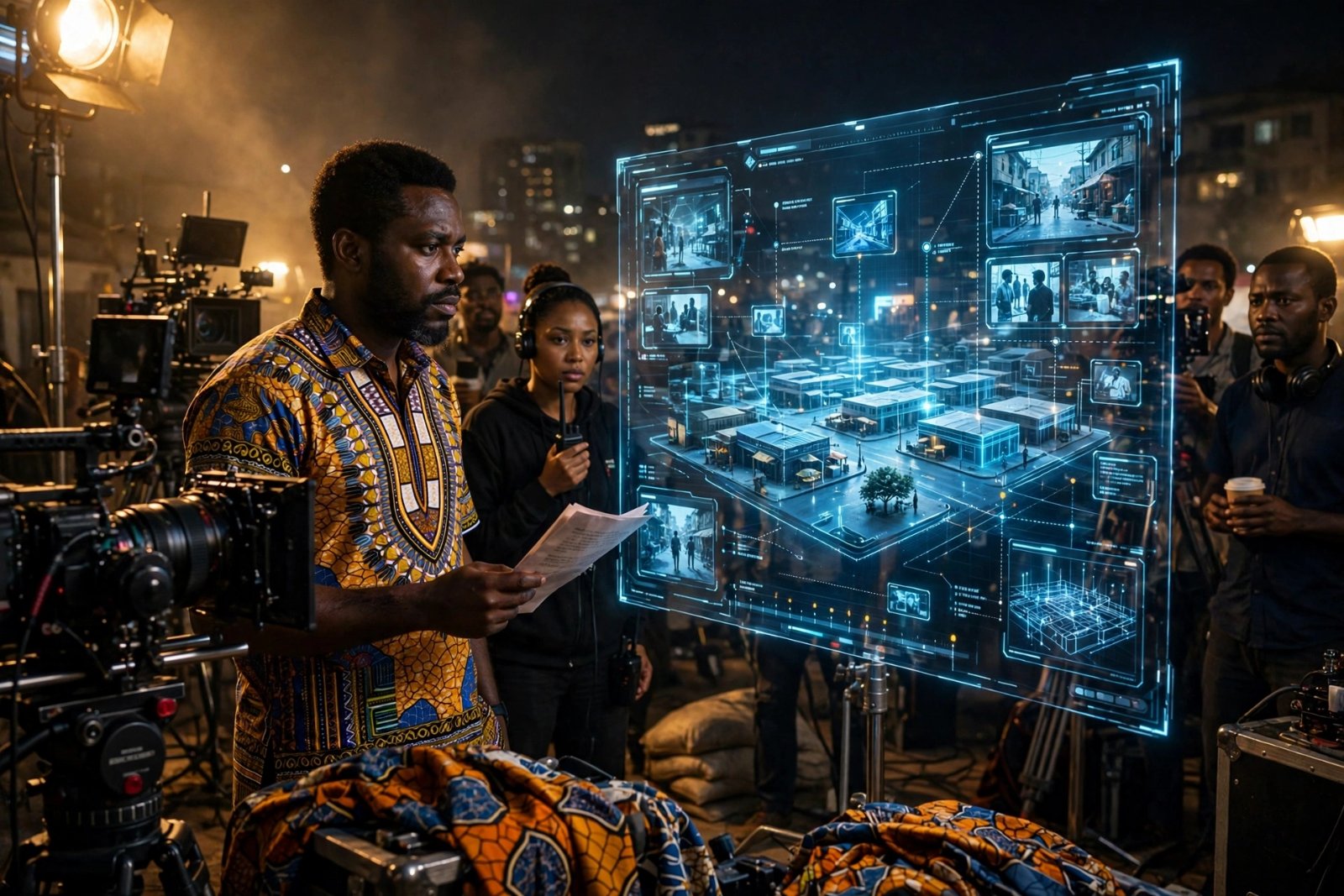
Nollywood has always been the industry that does more with less. Fast shoots, tight budgets, big stories. Now a new tool is entering the room, and it's making filmmakers excited and nervous in equal measure: artificial intelligence.
Why filmmakers are excited
At a July 2026 discussion reported by the News Agency of Nigeria, filmmakers said AI is reshaping visual storytelling in the country. They said AI-powered tools have cut production costs and made it possible to tell rich stories without the traditional high budgets.
The Abuja International Film Festival's director, Temitope Duker, has also urged Nollywood filmmakers to embrace AI as a creative tool for building digital sets, lowering costs and scaling up storytelling.
For an industry used to squeezing a big idea into a small budget, that promise is easy to understand.
What's already happening
→ A feature film about AI: Makemation, directed by Michael Akinrogunde, has been described as one of the first mainstream Nigerian productions to put AI at the centre of its story, and as Africa's first AI-themed feature.
→ AI behind the scenes: one industry outlet notes that AI-generated elements already appear in Nigeria's high-volume YouTube film ecosystem, in things like soundtrack production, voice synthesis and poster design.
→ A dedicated festival: the Nigeria AI Film Festival (NAIFF), founded by Obinna Okerekeocha, is billed as the country's first festival devoted to AI filmmaking. Its first edition was in Lagos in 2025, and the second returns to Alliance Française Lagos in September 2026. Organisers say they want films that use AI as a real storytelling tool, not a novelty.
→ Government interest: the Nigerian Film Corporation signed an agreement with PlotWeaver, an AI storytelling technology company, aimed at supporting filmmakers with script development, character design, cultural intelligence and market insight.
What AI can realistically help with
This part is my analysis, not a finding from the reports. In a Nollywood setting, AI is most useful for:
→ Pre-production: storyboards, concept art and location previews.
→ Post-production: cleanup, subtitles and visual effects.
→ Marketing: posters, trailers and social clips.
→ Small teams: letting a few people do work that once needed a large crew.
It is far less useful where Nollywood is strongest: performance, humour, language, music and the lived detail that makes audiences say "this is exactly how we talk."
The worries worth taking seriously
Filmmakers quoted in the July report said AI would complement human creativity, not replace it. Others are less relaxed.
Tech outlet Techloy put the real question well: AI may change how quickly and cheaply films get made, but who controls the creative decisions could decide what Nigerian films look and feel like in future.
A September 2026 opinion piece argued that the AI conversation can't be only about technology. It also has to be about identity and culture, and it called for policies on AI infrastructure, creative tech education, research, intellectual property protection and access to computing power.
Those points raise questions the industry will need to answer:
→ Who owns a performance or voice that has been cloned or synthesised?
→ If AI tools are trained mostly on foreign data, will they get Nigerian faces, accents and settings right?
→ Will cheaper production lift more storytellers, or just flood the market with more of the same?
I haven't found settled answers to these in the reports, so they remain open.
Where tech people come in
Here's a point many creatives miss: filmmakers need people who understand the tools. Someone has to build the workflows, test the models, protect the data and make sure the output reflects Nigerian reality. That makes this a place where tech skills and film skills can meet, whether you write code or tell stories.
The honest verdict
AI won't replace Nollywood's soul, because that soul lives in the writing, the acting and the culture behind it. But it will change how films are made and who can afford to make them. The winners will likely be the filmmakers who use it to serve a good story, not to replace one.
Your turn: Would you watch a Nollywood film made partly with AI, or does that change how you feel about it?
1 comment
Back to readingLog in to join the conversation.
No comments yet. Be the first.